

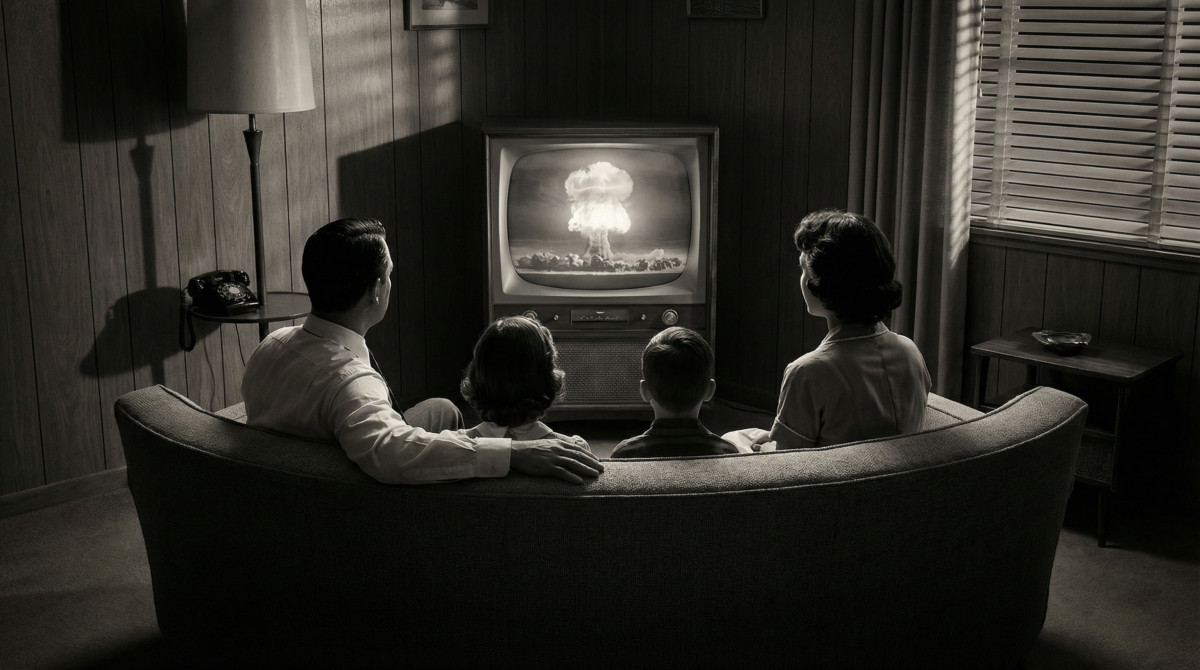
On February 1, 1951, the world changed—not because of a treaty or a battle, but because of a television signal. For the first time, the sheer, terrifying power of the atomic bomb was broadcast live into American living rooms.
Seventy-five years later, as we look back from 2026, that broadcast remains the most significant moment in the history of “spectacle warfare.” It was the day the apocalypse became a household guest.
The Engineering Madness of Klaus Landsberg
Broadcasting live from the Nevada desert in 1951 wasn’t as simple as hitting “Go Live” on a smartphone. It was a logistical nightmare. Klaus Landsberg, the visionary behind Los Angeles station KTLA, had to bridge a 300-mile gap between the Nevada Test Site and the Hollywood hills.
- The Relay: He built a “daisy chain” of microwave transmitters.
- The Peaks: Engineers hauled massive, sensitive equipment up to the freezing, wind-swept summits of Mt. Charleston and Mt. San Antonio.
- The Signal: They literally bounced the image of a nuclear explosion from mountain peak to mountain peak until it hit the KTLA transmitter.
When the countdown hit zero, the signal held. For the first time, a civilian audience saw the “flash” in real-time.
News Nob: The World’s Deadliest Press Box
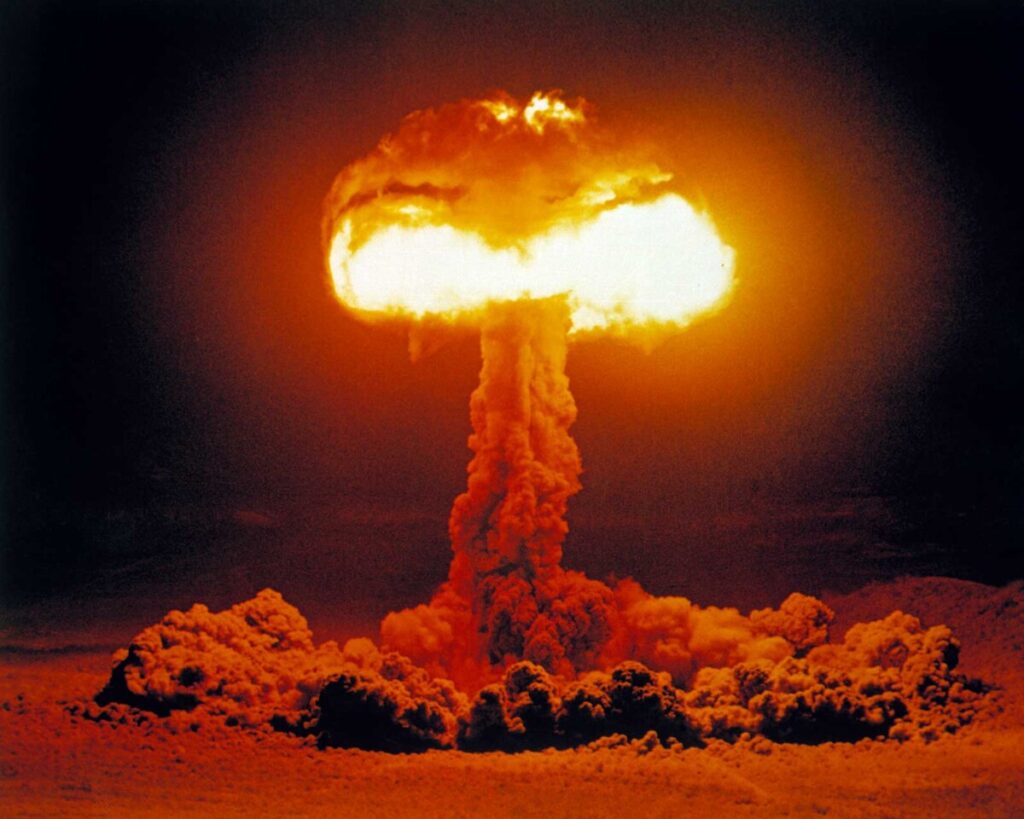
The reporters weren’t tucked away in a safe studio. They were stationed on a ridge 10 miles from ground zero, famously nicknamed “News Nob.” Reporters like Bill Welsh stood in the biting desert wind, wearing little more than trench coats and fedoras, staring into the abyss. When the bomb—a 1-kiloton “Operation Ranger” shot—detonated, the thermal pulse was so intense that the KTLA cameras were momentarily “blinded.” The screen went white, a haunting visual metaphor for the destructive power of the weapon.
“It was as if the sun had decided to rise at 5:45 in the morning, and then changed its mind.” — An anonymous viewer’s recollection.
From Secret Weapon to “Atomic Tourism”
The 1951 broadcast wasn’t just a news event; it was a pivot point in Cold War propaganda. Before this, the Manhattan Project had been a “ghost.” By bringing the tests to TV, the U.S. government achieved two things:
- Deterrence: It showed the Soviets that America’s nuclear arsenal was functional and terrifying.
- Normalization: It attempted to make the bomb feel “contained” and “manageable.” If you could watch it from your sofa while drinking a beer, how scary could it really be?
This led to the bizarre era of “Atomic Tourism,” where Las Vegas hotels advertised “bomb-watching parties” on their balconies, pairing mushroom clouds with martinis.
The 2026 Perspective: Why It Still Haunts Us
Today, we are saturated with “war as content.” We see high-definition drone strikes on TikTok and live-streamed insurgencies. But the 1951 KTLA broadcast was the “Patient Zero” of this phenomenon.
It taught us that humanity has a dark, voyeuristic fascination with its own destruction. As we mark the 75th anniversary, we aren’t just looking back at a technical achievement; we’re looking at the moment we stopped fearing the bomb enough to start watching it for entertainment.
The Legacy of “Operation Ranger”
While that first broadcast was a local L.A. feat, it paved the way for the 1952 nationwide broadcast that reached 35 million people. It turned the Nevada desert into a stage and the American public into a permanent audience for the nuclear age.
The “Atomic Party”: When the Mushroom Cloud Became a Brand
If the 1951 broadcast brought the bomb into the living room, the culture that followed brought it into the kitchen, the bar, and the beauty salon. This “Atomic Chic” era was a psychological defense mechanism—a way for a terrified public to wrap their heads around a force that could end the world by turning it into a theme.
1. The “Atomic Cocktail”: Toasting the Apocalypse
In the wake of the live Nevada broadcasts, Las Vegas became the “Atomic City.” Bartenders at the Sands and the Flamingo competed to create the most explosive drinks.
- The Recipe: Most “Atomic Cocktails” were heavy on vodka, brandy, and champagne, designed to give the drinker a “glow.”
- The Experience: High-end hotels advertised “Sky Rooms” with floor-to-ceiling windows facing the test site. Tourists would sip these potent mixes at 5:00 AM, waiting for the desert horizon to turn white.
2. Miss Atomic Bomb: The Pageant of Power
Perhaps the most surreal byproduct of the era was the “Miss Atomic Bomb” beauty pageant. In a move that feels like dark satire today, the Las Vegas Chamber of Commerce began crowning winners adorned with mushroom cloud props.
- Copa Girl Lee Merlin (1957): The most iconic image of this era features Merlin wearing a fluffy, white cotton-wool cloud attached to her swimsuit.
- The Message: By linking the most destructive weapon ever made with the “all-American girl,” the government and local businesses successfully “domesticated” the apocalypse. It made the nuclear age feel sexy, safe, and distinctly American.
3. Atomic Toys and Uranium Fever
The mania didn’t stop at the bar. It went straight to the playroom.
- The Gilbert U-238 Atomic Energy Lab: Released shortly after the 1951 broadcasts, this was a high-end chemistry set for kids that included real radioactive sources (low-level, but still).
- Pop Music: Songs like “Atomic Baby” and “Uranium Fever” climbed the charts, turning the hunt for radioactive ore into a catchy tune.
4. The 2026 Reflection: Dark Voyeurism
Looking back 75 years later, this “Atomic Party” feels like a fever dream. We see it as a coping mechanism: if you could drink it, dance to it, and dress like it, maybe it wouldn’t kill you.
The 1951 KTLA broadcast was the spark that lit this fuse. It turned a military secret into a pop culture icon. It was the moment we decided that if we had to live in the shadow of the cloud, we might as well have a drink in our hand while we watched.