

While Washington and Tehran play their tired game of nuclear poker in Geneva, a far more dangerous and potentially decisive game is unfolding in the quiet conference rooms of a London hotel. The Islamic Republic of Iran, battered by a disastrous war in June 2025, its economy in freefall, and its proxies across the Middle East decimated, is facing its most profound crisis since 1979. And for the first time in 45 years, its fractured, famously dysfunctional opposition is starting to look dangerously organized.
This week, more than 30 of the most significant figures in the Iranian diaspora convened for a two-day, closed-door summit. The guest list was a who’s who of the regime’s enemies: monarchists still loyal to the Pahlavi dynasty, grizzled Kurdish and Balochi separatists, secular republicans, and former regime insiders who have long since broken with the Ayatollahs. They are calling themselves the “Iran Freedom Congress,” and they have one goal: to build the government-in-waiting that will take over when the Islamic Republic falls.
And the consensus in London is that the fall is coming sooner than anyone thinks.
The Regime’s Worst Nightmare
For decades, the running joke about the Iranian opposition is that if you have two Iranians, you have three political parties. But the mood in London, according to sources who attended the private event, was different. “This is not another photo-op or exile conference,” said Mehrdad Marty Youssefiani, a veteran strategist who spent nearly two decades as chief counselor to Iran’s Crown Prince Reza Pahlavi and now directs the Middle East Forum’s Iran Freedom Project. “It is the first concrete attempt to build a coalition architecture that reflects the real Iranian mosaic.”
The Congress has already agreed on a set of “Minimum Common Principles”: a commitment to a democratic and secular order, a full manifesto of human rights, the rejection of revenge and collective punishment, and, crucially, the recognition of the rights of Iran’s long-persecuted ethnic minorities. They have scheduled a much larger, more inclusive congress for March 28-29, where they plan to unveil a transitional framework.
This is precisely what the regime has always feared. Not the disorganized protests that erupt periodically over gas prices or headscarves, but a disciplined, pluralistic, and legitimate alternative that can speak with one voice to both the Iranian people and the international community. The Middle East Forum, a think tank that has been actively supporting the opposition with Starlink internet terminals inside Iran, is calling the London congress “the regime’s worst nightmare.”
The Ghost of the Shah
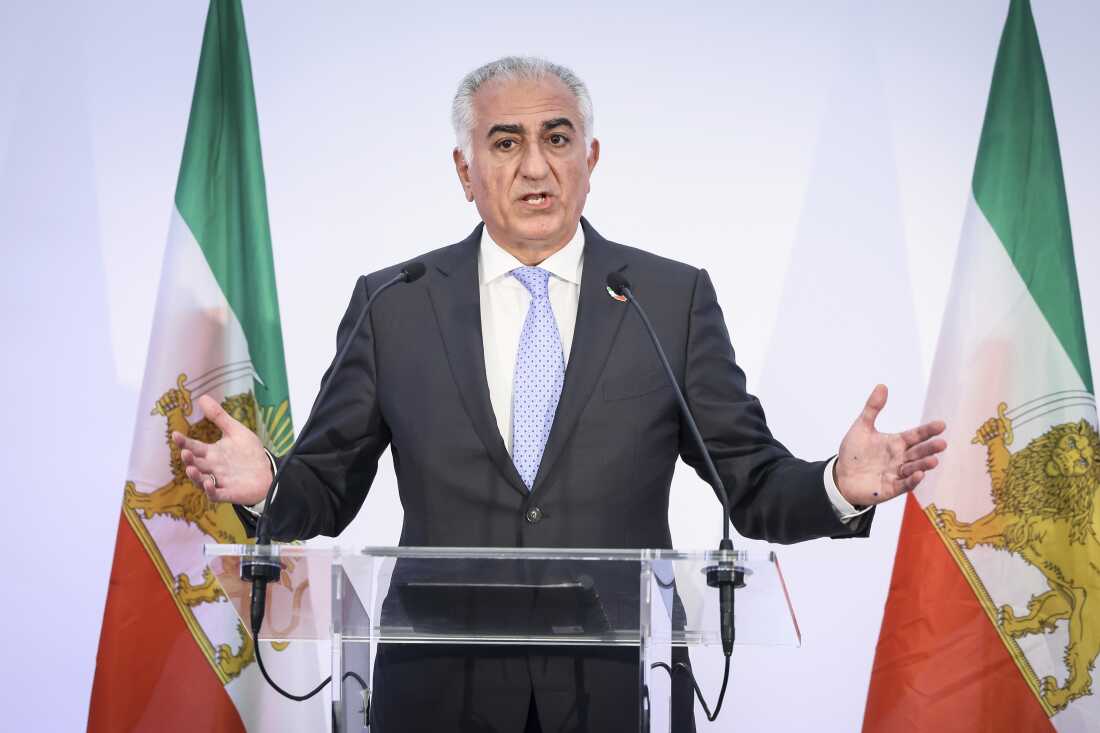
The elephant in the room, as always, is the Pahlavi question. Reza Pahlavi, the 65-year-old exiled son of the last Shah, has seen his popularity surge inside Iran, with protesters in the December uprisings frequently heard chanting “Javid Shah!” (“Long live the Shah!”). He has positioned himself as a transitional figure, a unifying symbol to guide the country to a new referendum. He has also been meeting with senior US officials, including Special Envoy Steve Witkoff, arguing for a policy of maximum pressure on the regime.
But his prominence is a source of tension. Many in the opposition, particularly ethnic minorities and former leftists who remember the Shah’s authoritarian rule, are wary of another monarchy. Organizers of the London congress have been careful to manage this dynamic. “He and the Congress are far more likely to succeed together than apart,” said Shahryar Ahy, a key organizer, stressing that the movement must be pluralistic.
For now, the different factions seem to agree that the enemy of their enemy is their friend. The crisis at home is too severe to allow for the usual squabbling. With rumors swirling in Tehran of a power struggle around the ailing Supreme Leader Ali Khamenei, and with the regime’s security forces showing signs of cracking, the exiles in London believe they have a closing window of opportunity to offer a credible alternative to chaos.
“The question is no longer whether change is coming to Iran, but whether the Iranian political nation will be organized when it arrives,” said Gregg Roman, the executive director of the Middle East Forum. “The Iran Freedom Congress is the most credible answer to that question we have seen.”